





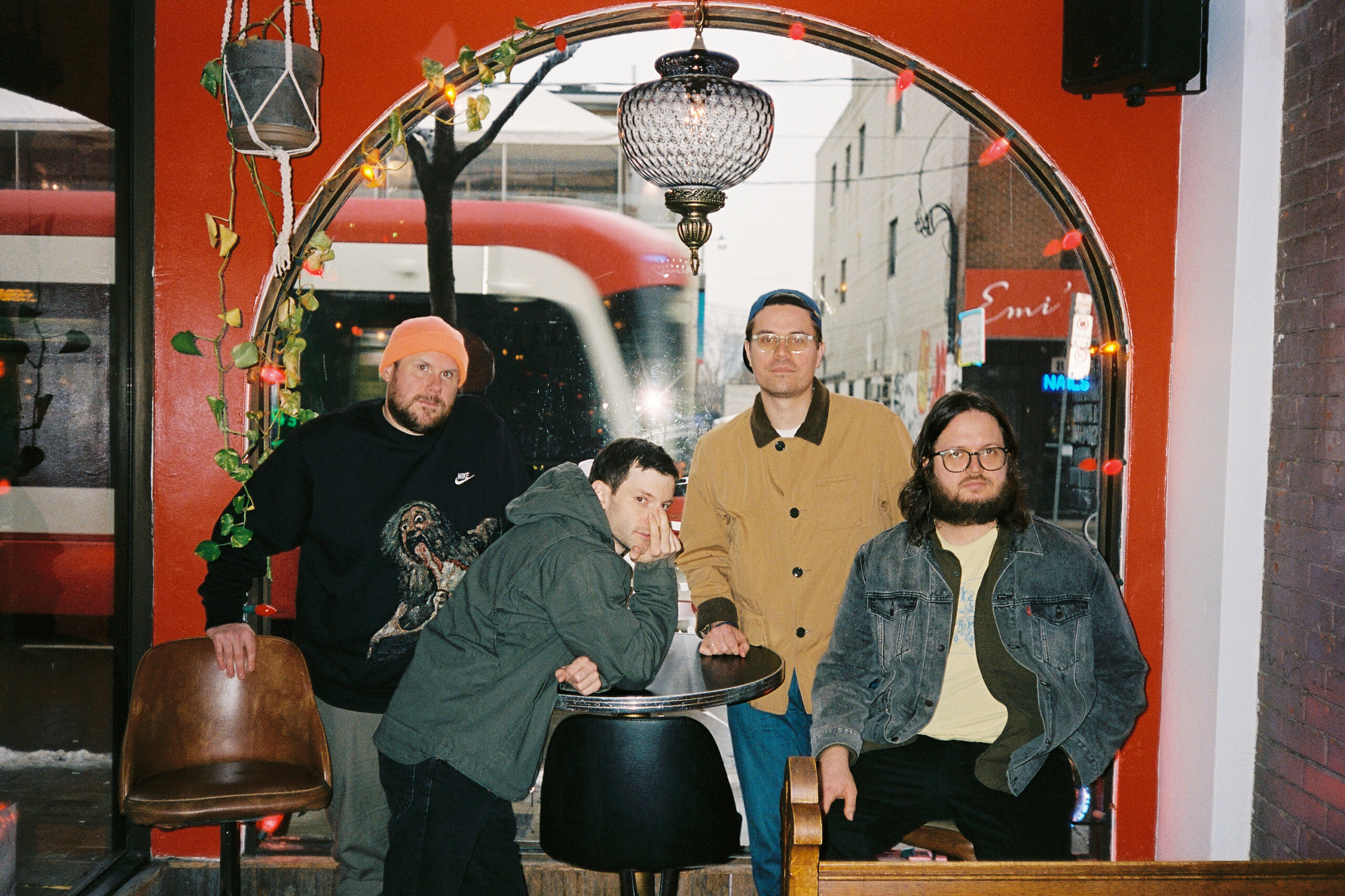
Over the past decade, PUP have thrived on volatility. It’s not really a joke when the Toronto punks release songs like “If This Tour Doesn’t Kill You, I Will” or put out albums called The Unraveling of PUPTHEBAND. Though its four members are all best friends, creative dysfunction and interpersonal friction make their snarling and self-deprecating songs thrilling. To their shock and occasional dismay, it’s why their four albums are critically acclaimed and the crowds at their galvanizing live shows have only grown. It hasn’t gone off the rails yet but it definitely could. The possibility it could all blow up at any second is the band’s magic.
Who Will Look After The Dogs?, PUP’s pummeling and cathartic fifth LP, is their most immediate, no-frills, and hard-hitting full-length yet. Out May 5 via Little Dipper / Rise Records, it’s the culmination of their past decade of constant touring and their palpable, livewire chemistry. While it deals with dark thoughts, it’s not whiny. It’s actually the most hopeful of their catalog, finding frontman Stefan Babcock at his most reflective and vulnerable. Over 12 tracks, he excavates his life’s relationships—romantic, with his bandmates, and most ruthlessly, his relationship to himself. Even if PUP weren’t entirely immune from jam-space spats and band- induced aggravations making this album, they scrapped their tedious perfectionism and rediscovered the joy of making loud music together. They truly had fun this time, we promise!
Following the release of 2022’s The Unraveling of PUPTHEBAND, their most adventurous and maximalist full-length, the band’s lives changed significantly. Guitarist Steve Sladkowski got married, bassist Nestor Chumak settled into being a dad, and drummer Zack Mykula moved to a new place in Toronto that allowed him to expand his home studio. As the others were making big decisions and getting their acts together, Babcock felt isolated. He had just ended a decade- long relationship and cut himself off from his bandmates. “We don’t get along when we’re making records, so I tend to retreat,” says Babcock. “In the past, I’d find comfort in another person, but this time I was at it alone. Being bored and lonely I just started writing music nonstop.” Where the older records took Babcock two to three years to get through 12 tracks, he wrote over 30 songs in a year.
While writing, Babcock had time to reflect and maybe even grow up. “So many early songs were about how I’m a complete fuck up,” he says. “While that remains true, I stopped hating myself as much as I did when I was younger and the people around me accepted me for who I am.” Where PUP’s previous LPs served as a window into six months of Babcock’s life, the songs here take a holistic view of his romantic partnerships, his friendships, and how he treated himself from his youth to now. In a way, writing this album served as a mirror to his emotional growth. It was hard, occasionally sucked, but was ultimately worth it.
Babcock began to view these songs as a chronology: the opening tunes like the blistering “No Hope” and the caustic “Olive Garden” were written from the perspective of his past youthful naïveté, the middle third from frequent bouts of self-loathing, and the final few cuts from the acceptance that comes with finally getting your shit together. While “Hallways” was the first song he wrote for the album, immediately following his breakup, it’s tucked towards the end of the tracklist. Despite its raw feelings, there’s levity and heart in its chorus and the lines, “Cause when one door closes, it might never open / There might be no other doors.” It’s bracing and raw, but its lightness keeps it together. “There’s a lot of sadness in the back half of the record, but there’s a lot more hope here too,” says Babcock. “I’m just coming to peace with who I am.”
When Babcock brought what he wrote to the rest of the band, they all agreed to let the songs develop as organically as possible. “We realized it should be four people in a room playing,” says Chumak. “The most important thing was trying to do the most with just us.” Historically, the band’s jam sessions are contentious affairs but here, everything fell into place for once. Take the lead single “Paranoid,” which bursts with apocalyptic energy. The song careens from bombastic riffs and Babcock’s ferocious screams, to unrelenting clangs from the rhythm section. It’s the entire band at its heaviest but the chorus is as anthemic and infectious as anything they’ve ever done. It’s quintessential PUP. “We straddle the line between it falling off the rails and then being totally in the pocket,” says Sladkowski. “But our four disparate personalities are what make it interesting.”
They decamped to Los Angeles to work with producer John Congleton (St. Vincent, Death Cab For Cutie, Mannequin Pussy). In the studio, he helped the band work through their nagging tendency to overthink things. When they’d like how a take sounded, he’d remind them that they didn’t have to try it again. He’d tell them when songs felt overwritten and to trust each other in the moment. “If we can’t solve an arrangement or songwriting problem in the room between the four of us in a few minutes, then it’s not really worth solving because we’d just get into a hole and lose perspective,” says Mykula. “Thanks to John, getting out of our heads made it fun.”
Congleton also gave the band the space to, in their words, “completely annihilate” the track “Hunger For Death” and rewrite it in the studio. On “Get Dumber,” which features backing vocals from Jeff Rosenstock, there’s a flubbed line (instead of “It’s pretty fucking obnoxious,” Rosenstock yelps, “ah, lyrics…”). On playback, the mistake made the song even more special. They recorded the entire album in three weeks—less than half the time it took to make The Unraveling of PUPTHEBAND. “When I first started writing the lyrics for this record, everything felt really heavy,” says Babcock. “By the time we recorded it, even those dark songs felt light and fun. We didn’t even really fight while making this record. It all just felt fucking awesome.”
Compared to the rest of their catalog, Who Will Look After The Dogs? evokes the lightning-in-a- bottle intensity of their self-titled debut (except they are much better at their instruments now). Though they’re all well out of their reckless twenties and have played nearly a thousand shows since then, there’s still unpredictable mayhem in the arrangements and an acerbic bite in the writing. “Because we were less precious with everything this time, it felt like we were capturing the feeling of being in a band for the first time when you finally hear everything clicking,” says Babcock. There’s even a newfound optimism and hope here, especially on the surprisingly graceful closer “Shut Up.” During the penultimate track “Best Revenge,” Babcock sings, “The best revenge is living well / Didn’t even know what was right in front of me.” Even when things seem irrevocably fraught and you slip back into stupid old habits, being around your closest friends can get you through. Or, at the very least, they can tell you to get over yourself.
“With the band, I have such an intense, personal connection with those three guys that I don’t have with anybody else in my life,” says Babcock. “Sometimes you have to really go through the shit to have that big high of creating something with your best friends that you could never do alone.”